
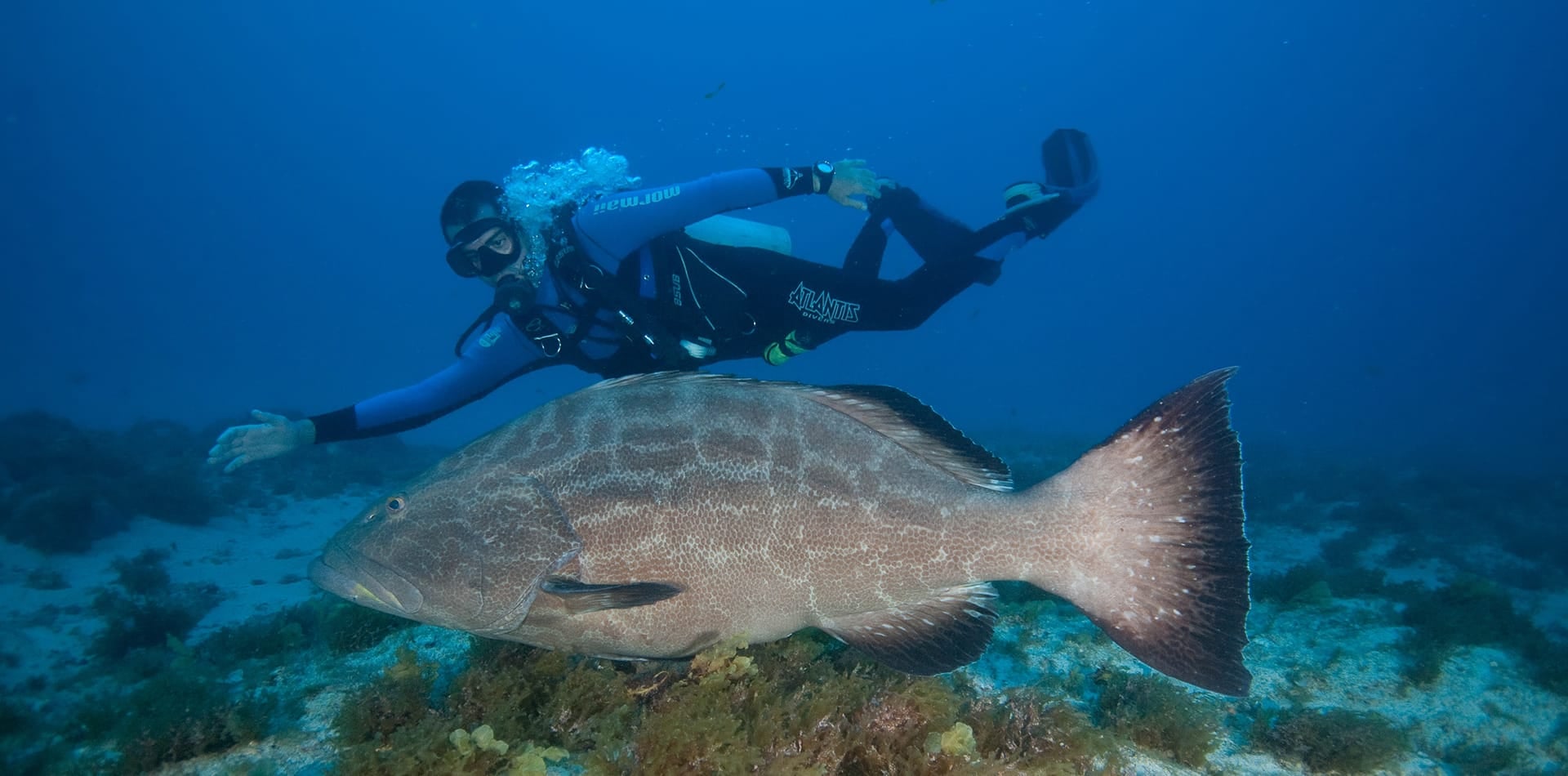
Depth, seaside, and skill level for each of the 21 dive sites Noronha’s licensed operators run, plus the park rules and the best months to dive
Fernando de Noronha has 21 named dive sites spread across two coasts, and picking one is less about which is prettiest than about which side of the island is workable that week. The archipelago is protected by a National Marine Park and listed as a UNESCO World Heritage Site. It offers excellent diving conditions, with an average water temperature of 26°C year-round, and features sites ideal for both beginners and experienced divers.
Roughly 40% of visitors scuba dive and about 75% snorkel or free dive, according to Projeto Golfinho Rotador, the NGO that has monitored the area’s spinner dolphins since 1990. No one dives here alone: the park only allows tank dives run by ICMBio-authorized operators, so the real question is which sites your certification and the season allow. Want to know which ones match your level?
PlanetaEXO, an ecotourism platform specializing in diving tours in Brazil, has put together this guide to the best dive sites in Fernando de Noronha. Check it out below!
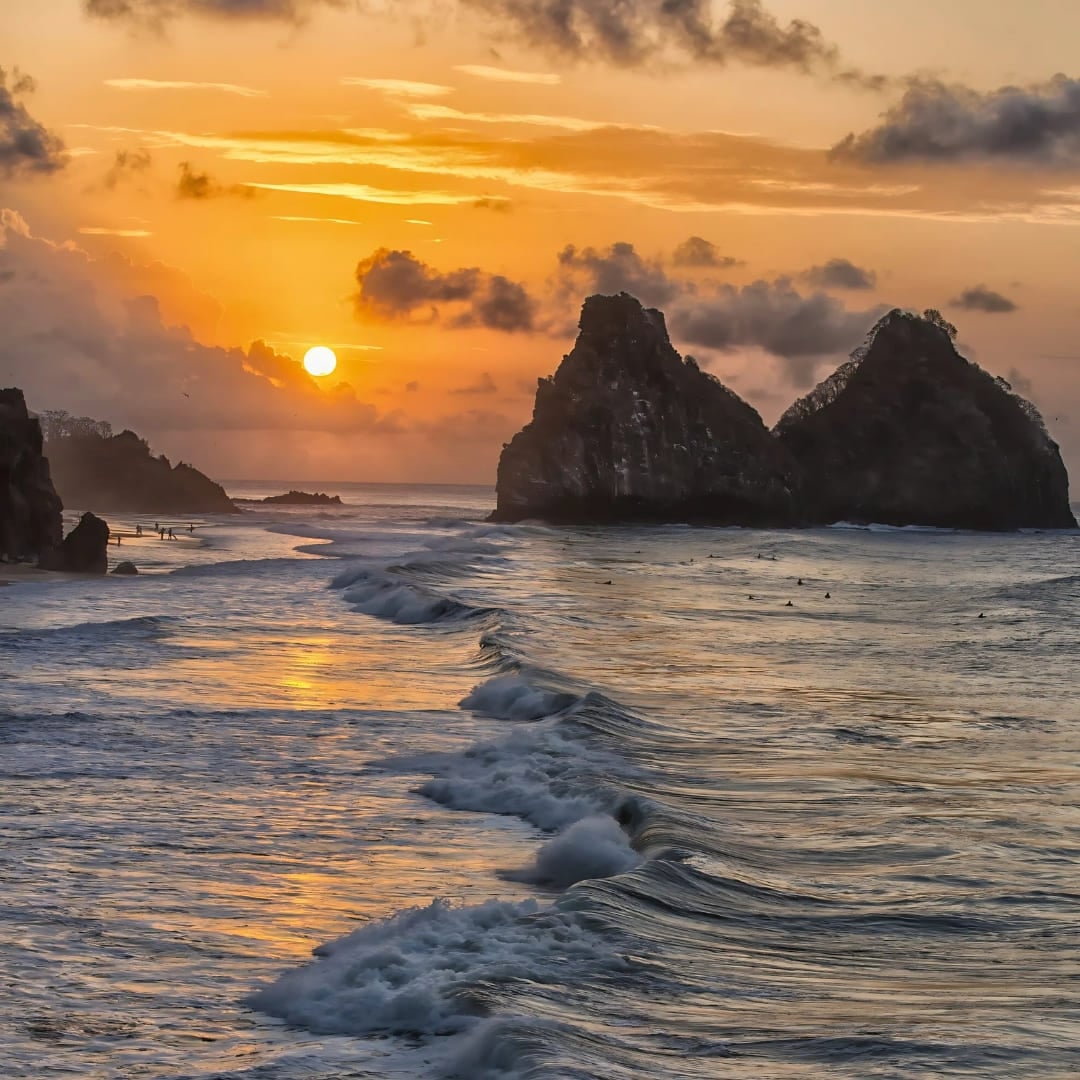
Dive Sites in Fernando de Noronha
Fernando de Noronha dive sites are divided between the Mar de Dentro (the sheltered coast facing the Brazilian mainland) and the Mar de Fora (the open-ocean side facing Africa).
That split decides your calendar more than anything else: the inner sea dives best from July to December, and the outer sea from March to May.
Depths below are the working depths published by Noronha’s licensed operators, not maximum bottom depths.
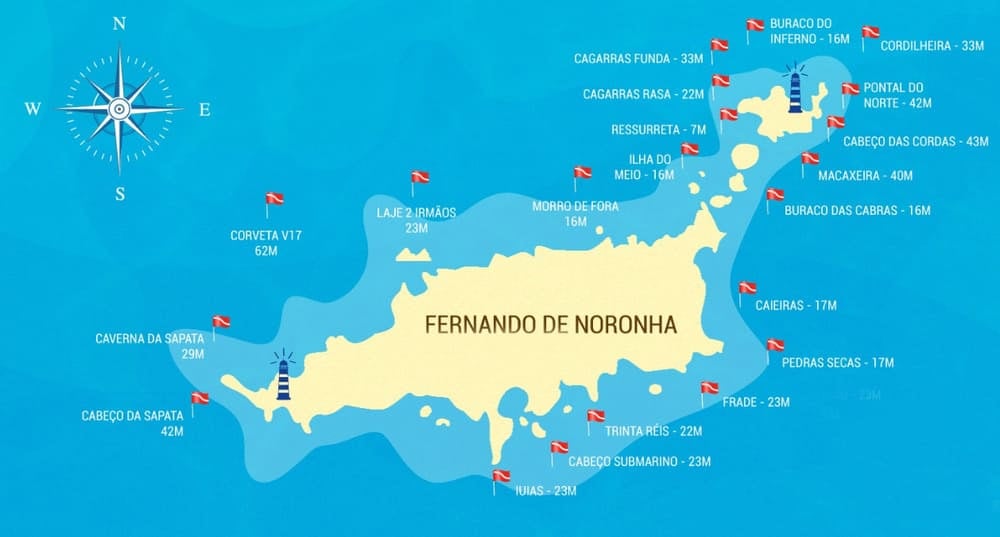
Cabeço da Sapata (42m)
Cabeço da Sapata is a deep pinnacle on the Mar de Dentro, dived multilevel and reserved for advanced and technical divers. The deeper you go, the bigger the fish: black grouper, badejo, rays, and the occasional shark.
It sits off Ponta da Sapata, the headland the Corveta Ipiranga V17 struck in 1983, which is why the wreck lies where it does.
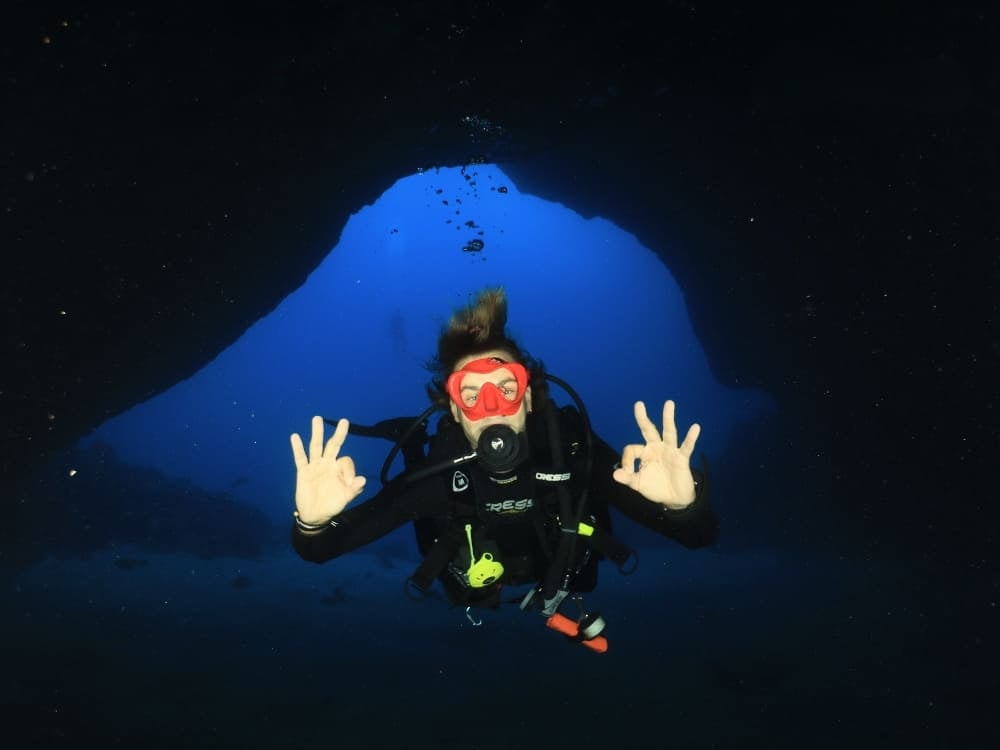
👉 Read more: 10 Facts About Fernando de Noronha
Caverna da Sapata (18m)
A naturally lit cave roughly 15 m high and 30 m long, big enough that the light changes as you move through it. It shelters large rays and black grouper.
The site gets current, but operators run it for basic and advanced divers alike, which makes it one of the few cave dives on the island open to newly certified divers.
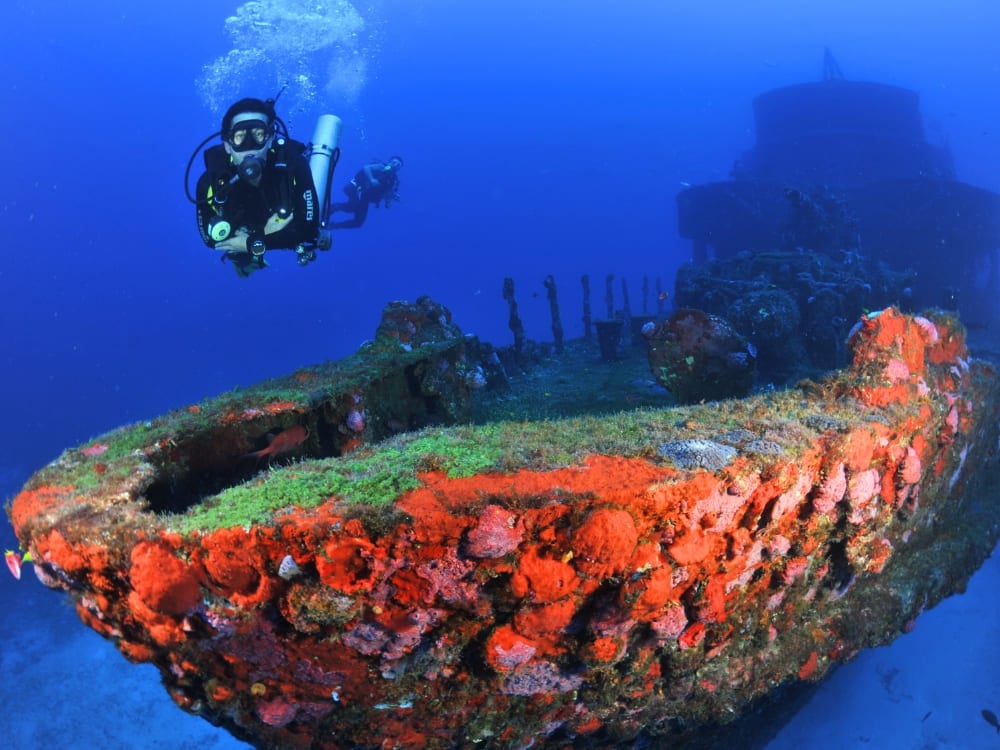
Corveta Ipiranga V17 (62m)
The most complete shipwreck in the country, and for many divers, the top of any list of the best scuba diving spots in Brazil.
The Brazilian Navy corvette Ipiranga, about 56 m long and launched in Rotterdam in 1954, hit Ponta da Sapata on 3 October 1983 and took eight hours to go down. Now, it rests upright at 62 m (structure intact) with crew belongings still inside.
Deep or technical certification and an operator assessment are required before you are cleared to dive here.
👉 Explore the adventure: Advanced Adventurer Diving Course in Fernando de Noronha
Laje Dois Irmãos (22m)
A reef off the twin peaks of Morro Dois Irmãos and one of the most dived sites by certified divers on the island. Up to 22 m, you see green turtles, spotted eagle rays, and sharks.
Moderate depth and good structure make it the usual second or third dive of a trip.
Morro de Fora (16m)
Close to Praia da Conceição, on the sheltered side, with dives to 16 m. The site is known for its concentration of fire coral; moray eels, trumpetfish, and blennies hide in the rock.
It’s an easy, colorful dive for beginners moving past their first tanks.
Ilha do Meio (15m)
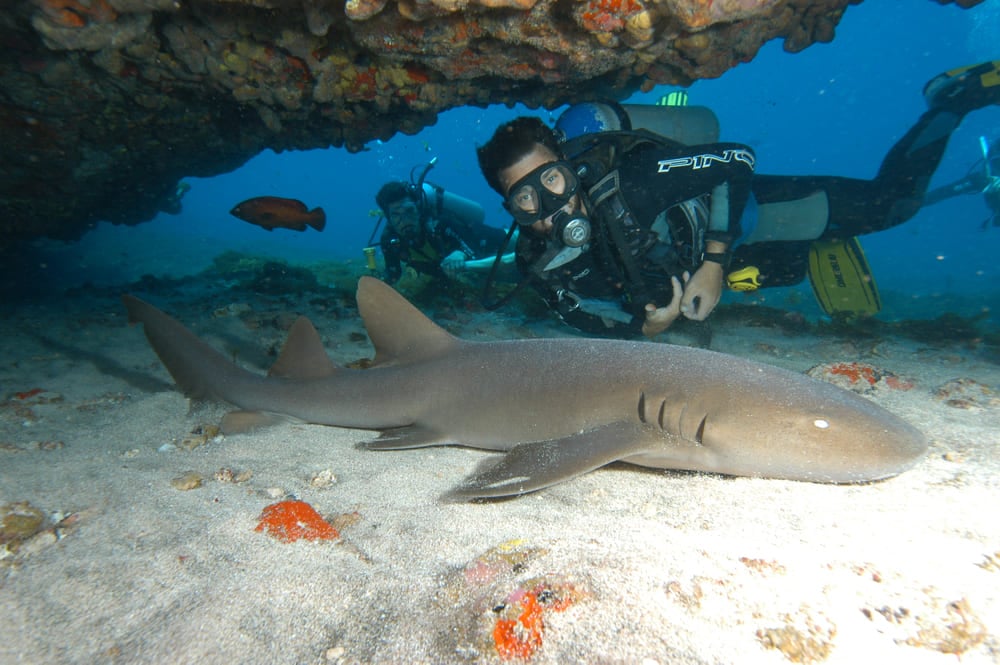
Sheltered and calm, sitting between the two seas, with dives to 15 m. Its small caves keep producing surprises: nurse sharks resting on sand, moray eels, and shoals that hold still long enough to photograph.
One of the best dive sites in Fernando de Noronha for underwater photographers and for divers on their first certified experiences.
Ressurreta (8–12 m)
Ressurreta sits between Ilha da Rata and Ilha do Meio, in 8 to 12 m of calm water. It is the standard site for discovery dives and one of the few run as a night dive.
Groupers and barracudas frequently swim through the area, with the shallow waters allowing for extended bottom time.
👉 Explore the adventure: Open Water Diving Course in Fernando de Noronha
Cagarras Rasa (22m)
The shallow, sheltered start of the Cagarras formation (dived to about 22 m). It takes discovery dives and certified divers on the same site: lobsters wedged in the rock, octopus, rays and a steady traffic of reef fish.
Cagarras Funda (33m)
The deep half of the same formation (dived to about 33 m) where the rock walls bottom out at 34 m. Advanced divers get canyons, overhangs, and the bigger pelagic traffic that the shallow section does not see. Currents are the norm here, so it is run as a drift.
Buraco do Inferno (15m)
Although its name translates to “hell’s hole,” this submerged cave is far more inviting than it sounds. Located at a depth of around 15 m, the site boasts dramatic rock structures where sea turtles, octopuses, and lobsters frequently seek refuge in the rock crevices.
Calm, shallow, and easy to navigate, it suits beginners and intermediate divers.
Cordilheiras (30m)
A 30 m rock wall near Ilha da Rata, and one of the more dramatic profiles in the archipelago. The draw is the geology as much as the fish: a single continuous face with reef life stacked along it. Due to depth and exposure, it's considered an advanced-level dive.
Pontal do Norte (42m)
Deep and exposed, at 42 m, at the northern tip of the island. Large fish and dense marine life are the reward; strong currents and depth are the price. When conditions line up, only experienced divers are allowed.
Cabeço das Cordas (17–33m)
One site, two dives. The shallow section down to 17 m is open to basic divers, while advanced divers continue to 33 m. Current is the defining feature, and it brings the fish: schools of jacks, dog snapper, and piranjica.
Macaxeira (40m)
At the far north of the island, on the Mar de Fora, at 40 m. Constant current carries you to a wall of collapsed rock and then onto an algae plateau where jacks, anchovies, and spotted eagle rays pass.
Its best-known feature is the Eel Garden, where nurse and lemon sharks turn up occasionally.
Buraco das Cabras (15m)
A drift dive that starts on the outer sea and finishes on the inner sea, at around 15 m. Volcanic rock formations shelter turtles, rays, surgeonfish, and piranjica, with corals, sponges, and feeding shoals along the way. The crossing between the two coasts is the point of the dive.
Caieiras (17m)
A 17 m dive between three rock formations, thick with algae, which makes it one of the feeding and resting areas for sea turtles. Sharpnose sharks, barracuda, and passing shoals also show up regularly. One of the best dive sites in Fernando de Noronha for intermediate divers.
Pedras Secas (15m)
Only 15 m deep, Pedras Secas is routinely named among the best diving spots in Brazil. The rock forms corridors, canyons, arches, grottoes, and small caves you swim through rather than over. Barracuda, rays, turtles, and lobsters live in the maze.
Frade (8–22m)
Situated in front of Praia do Atalaia on the Mar de Fora, off Ilha do Frade, offering dive depths ranging from 8 to 22 m.
It is one of the busiest sites on the island because of the sheer variety of fish, rays, turtles, lobsters, and morays. The depth range means beginners and certified divers can share the same site.
Trinta Réis (22m)
A small island on the outer sea, off Enseada dos Abreus, dived to 22 m. The highlight is a canyon between two rock walls. Sharks, rays, turtles, and very large shoals of surgeonfish and piranjica use the passage.
Cabeço Submarino (23m)
One of the most interesting formations on the Mar de Fora, opposite Baía do Sueste. The dive is a spiral ascent to 23 m that covers the whole pinnacle in one go. Lobsters, barracudas, turtles, and dense shoals live on it, with the occasional shark passing by.
Iuias (12–25m)
Canyons and caves like Pedras Secas, but deeper (12 to 25 m), farther offshore, and exposed to current, which means only experienced divers go. Sharks are seen here more often than at almost any other site in Noronha, alongside a long list of reef species.
👉 Read more: How to get to Fernando de Noronha, Brazil?
How to Dive in Fernando de Noronha: Rules, Fees, and Operators
Every tank dive inside the park must be run by an operator authorized by ICMBio, the federal agency that manages the marine park. Independent diving and unguided gear rentals are strictly prohibited. Authorized dive centers must verify your credentials, and for deeper dive locations, they will conduct a skill evaluation before approving your entry.
Two separate charges apply to every visitor (neither includes the dive itself):
- Park entry ticket (ICMBio): R$ 384 for foreign visitors and R$ 192 for Brazilians, valid for 10 days, bought online or at the Visitor Center in Vila do Boldró.
- Environmental Preservation Tax (TPA): In 2026, rates begin at R$ 105.79 for the first day and increase progressively, bringing the total for a seven-day stay to R$ 672.85.
Inside the national park, strict regulations apply: collecting flora, fauna, rocks, or shells is forbidden, as is touching or feeding marine life, bringing fishing gear, using selfie sticks, or landing on secondary islands. Validate your entry pass at the Porto de Santo Antônio kiosk before departing.
👉 Read more: Where to stay in Fernando de Noronha?
When to Dive Each Side of the Island
No month opens all the best dive spots in Fernando de Noronha at once: the archipelago has two diving seasons, one per coast.
The Mar de Dentro, sheltered from the swell, is at its best from July to December, which covers Cabeço da Sapata, Caverna da Sapata, and Pontal do Norte. Meanwhile, the Mar de Fora opens up from March to May, when Pedras Secas, Iuias, and Cabeço Submarino are reliably diveable.
Water visibility is generally best from August to December, when the sea is calmest. Water temperature stays around 26°C all year, so a thin wetsuit is enough. If your dates are fixed, choose the coast that works in that window.
👉 Read more: When is the Best Time to Dive in Fernando de Noronha, Brazil?
Frequently Asked Questions About Diving in Fernando de Noronha
Do you need a certification to dive in Fernando de Noronha?
No. Discovery dives (batismo) allow uncertified divers to dive with an instructor at sites like Ressurreta and Cagarras Rasa. Diving other sites independently requires an open water certification, obtainable on the island.
Which are the best dive sites in Fernando de Noronha for beginners?
Ressurreta (8–12 m), Ilha do Meio (15 m), Cagarras Rasa (22 m), Buraco do Inferno (15 m), and the shallow half of Cabeço das Cordas (17 m). All are sheltered or shallow enough to give you a long, calm dive.
Can anyone dive the Corveta Ipiranga V17 wreck?
No. Resting at 62 m, Corveta Ipiranga V17 exceeds recreational limits and requires deep or technical certification. Operators review diver experience beforehand, so dives must be booked in advance.
Is snorkeling an alternative to scuba diving in Fernando de Noronha?
Yes. In fact, most travelers opt for snorkeling or free diving (around 75%) rather than scuba diving with tanks (about 40%). For the best conditions, Fernando de Noronha snorkeling is ideal in the sheltered inner sea between June and December, granting access to the same vibrant reefs featured in shallow dive itineraries.
Diving Noronha’s Best Sites with PlanetaEXO
Now that you know the best dive sites in Fernando de Noronha by depth, coast, and level, the next step is matching them to your dates and your certification.
PlanetaEXO is an ecotourism platform specializing in Fernando de Noronha tours. By partnering with licensed local operators across the island, we ensure all your dives are led by fully authorized teams. From selecting the right certification course to arranging the ideal dive count, we take care of all the logistics for your journey. Contact us now!
Keep reading
October 1, 2026
PlanetaEXO’s new mini-doc showcases ecotourism in Lençóis Maranhenses
In “Lençóis Maranhenses: Far From The Crowds, Close To What Matters”, PlanetaEXO’s mini-doc shows how ecotourism is changing life for local communities.
September 28, 2026
Lovely, Overwhelming, Total Joy: Maja’s 15-Year Wait for Lençóis Maranhenses
15 years of waiting, a 6-day full itinerary, and dunes like snow: a retired Slovenian professor’s honest account of Lençóis Maranhenses.
September 25, 2026
Meeting of Waters in Manaus, Brazil: Why the Rio Negro and the Solimões Don’t Mix
Why don’t the Rio Negro and Solimões mix? The science behind the Meeting of Waters in Manaus, its place in Brazilian culture, and how to see it.